
30 Sep ACT for ALS Reauthorization Act Passes; Legislation Sent to the President for Signature
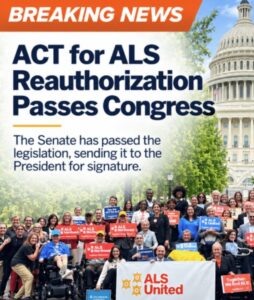
The ACT for ALS Reauthorization Act of 2026 has passed both the House and Senate, completing congressional action and sending the legislation to the President for signature.
Reaching this moment reflects years of work by people living with ALS, families, caregivers, researchers, clinicians, advocates, and ALS United member organizations. Across the country, members of the ALS community shared their experiences, engaged with policymakers, participated in advocacy efforts, and helped reinforce why continued federal support for research and expanded access is so important.
The reauthorization will extend ACT for ALS programs through 2031, continuing support for expanded access to investigational treatments for people who cannot participate in traditional clinical trials and for research into ALS and other rare neurodegenerative diseases. The legislation also includes provisions to strengthen the expanded access grant program and support continued FDA planning and reporting.
ALS Rhode Island was proud to be part of that effort as a member of ALS United. In May, ALS United member organizations brought more than 50 advocates to Capitol Hill for Hill Day, while others met with lawmakers in their home districts. ALS United organized a congressional briefing and met with House and Senate committees, and advocates kept up grassroots outreach alongside coalition partners and congressional champions throughout the reauthorization process. Once signed, the legislation will allow these programs to continue, supporting expanded access to investigational therapies and strengthening the ties between scientists, clinicians, government, and industry.
With congressional action now complete, the legislation heads to the President for signature. We will continue working with our members and partners to support the implementation of the reauthorized programs and build on the progress made through ACT for ALS.
Thank you to everyone who shared their experiences, contacted lawmakers, participated in advocacy, and helped bring this legislation to this point.