

IS ALS?

Amyotrophic lateral sclerosis (ALS), often referred to as “Lou Gehrig’s Disease,” is a progressive neurodegenerative disease that affects nerve cells in the brain and the spinal cord.
Motor neurons reach from the brain to the spinal cord and from the spinal cord to the muscles throughout the body. The progressive degeneration of the motor neurons in ALS eventually leads to their death. When the motor neurons die, the ability of the brain to initiate and control muscle movement is lost. With voluntary muscle action progressively affected, patients in the later stages of the disease may become totally paralyzed.
A-myo-trophic comes from the Greek language. “A” means no or negative. “Myo” refers to muscle, and “Trophic” means nourishment-“No muscle nourishment.” When a muscle has no nourishment, it “atrophies” or wastes away. “Lateral” identifies the areas in a person’s spinal cord where portions of the nerve cells that signal and control the muscles are located. As this area degenerates it leads to scarring or hardening (“sclerosis”) in the region.
As motor neurons degenerate, they can no longer send impulses to the muscle fibers that normally result in muscle movement. Early symptoms of ALS often include increasing muscle weakness, especially involving the arms and legs, speech, swallowing or breathing. When muscles no longer receive the messages from the motor neurons that they require to function, the muscles begin to atrophy (become smaller). Limbs begin to look “thinner” as muscle tissue atrophies.
Amyotrophic lateral sclerosis (ALS), often referred to as “Lou Gehrig’s Disease,” is a progressive neurodegenerative disease that affects nerve cells in the brain and the spinal cord.

Motor neurons reach from the brain to the spinal cord and from the spinal cord to the muscles throughout the body. The progressive degeneration of the motor neurons in ALS eventually leads to their death. When the motor neurons die, the ability of the brain to initiate and control muscle movement is lost. With voluntary muscle action progressively affected, patients in the later stages of the disease may become totally paralyzed.
A-myo-trophic comes from the Greek language. “A” means no or negative. “Myo” refers to muscle, and “Trophic” means nourishment-“No muscle nourishment.” When a muscle has no nourishment, it “atrophies” or wastes away. “Lateral” identifies the areas in a person’s spinal cord where portions of the nerve cells that signal and control the muscles are located. As this area degenerates it leads to scarring or hardening (“sclerosis”) in the region.
As motor neurons degenerate, they can no longer send impulses to the muscle fibers that normally result in muscle movement. Early symptoms of ALS often include increasing muscle weakness, especially involving the arms and legs, speech, swallowing or breathing. When muscles no longer receive the messages from the motor neurons that they require to function, the muscles begin to atrophy (become smaller). Limbs begin to look “thinner” as muscle tissue atrophies.

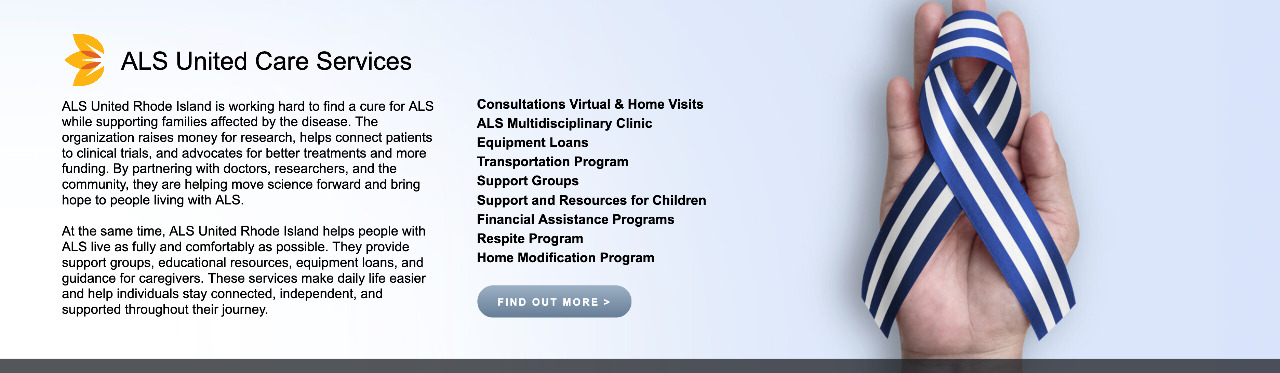
Register with us to access free, personalized services—available to all individuals living with ALS, regardless of insurance coverage or immigration status.
Once registered, you’ll meet with our Care Services Team, who will work closely with you to identify your current needs and plan for future support. Research shows that people with ALS who receive comprehensive, individualized care often experience a significantly improved quality of life.
For more information, email

people in the US diagnosed per year
is the average life expectancy
of cases are inherited through a mutated gene